Goals & Indicators

Goals & Indicators

Regional Goals, Indicators & Air Quality Priorities

The Bulkley Valley Lakes District Airshed Management Plan establishes long-term goals, measurable indicators, and collaborative implementation strategies designed to improve regional air quality, reduce emissions, and protect public health.

Strategic Framework

The Clean Air Plan combines science-based monitoring, stakeholder collaboration, education initiatives, and emissions management strategies into a coordinated regional framework focused on long-term air quality improvement.

The indicators below represent key areas identified within the airshed management plan and provide the foundation for future monitoring, reporting, and implementation activities.

Strategic Goals
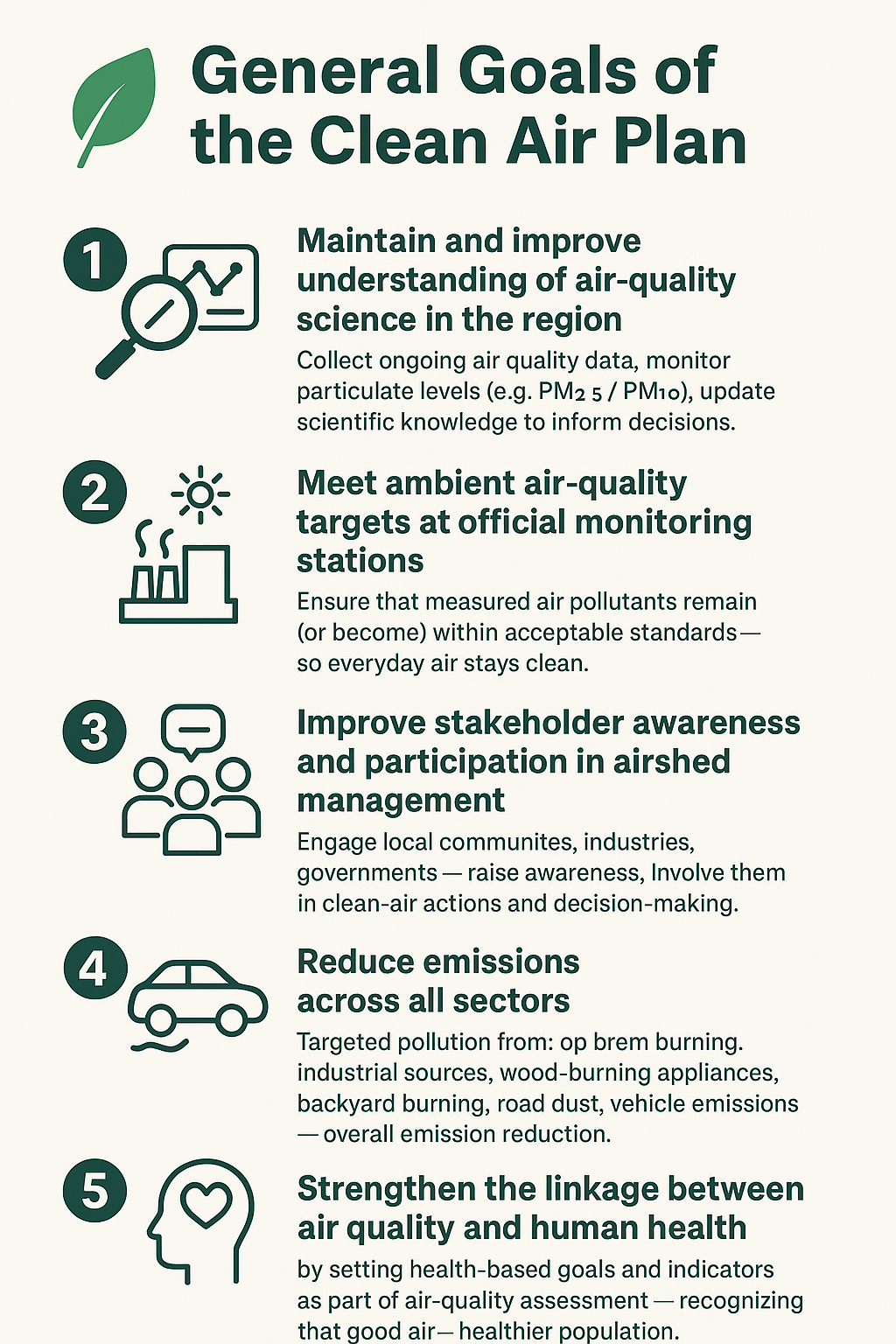
The Clean Air Plan identifies several long-term goals that guide implementation priorities throughout the region.

Improve Ambient Air Quality

Support measurable reductions in airborne contaminants and improve ambient air quality throughout the Bulkley Valley Lakes District airshed region.

Reduce Fine Particulate Matter (PM2.5)

Reduce emissions sources that contribute to fine particulate matter concentrations, including residential wood smoke, open burning, transportation emissions, and industrial activities.

Protect Human Health

Improve awareness of air quality impacts and reduce public exposure to harmful pollutants through monitoring, education, and community-based initiatives.

Strengthen Monitoring & Reporting

Expand regional monitoring capabilities and improve public access to air quality data, AQHI information, and reporting resources.

Support Shared Responsibility

Encourage collaborative participation between governments, Indigenous communities, industry sectors, organizations, institutions, and residents.

Key Indicators

Monitoring indicators support long-term evaluation of regional air quality conditions and implementation progress.

Primary Pollutant PM2.5
Monitoring Focus Ambient Air Quality
Community Approach Collaborative
Plan Type Living Framework

Participate in the Clean Air Plan

The Clean Air Plan is intended to be a collaborative and evolving regional framework supported by governments, communities, industries, researchers, organizations, and residents throughout the airshed.

Stakeholders are encouraged to both report implementation actions and provide feedback that may help strengthen future updates, priorities, indicators, monitoring approaches, and regional air quality strategies.

Emission Sources & Implementation Priorities

The Clean Air Plan identifies multiple emissions sources and priority areas that contribute to regional air quality conditions.

Residential Wood Smoke

Residential wood burning remains an important contributor to wintertime PM2.5 concentrations throughout many communities within the airshed region.

Implementation priorities include cleaner burning education, wood stove exchange initiatives, public awareness campaigns, and improved household heating practices.

Transportation Emissions

Transportation corridors, idling, freight activity, and vehicle emissions contribute to cumulative regional air quality impacts.

Long-term planning initiatives support improved transportation efficiency, reduced emissions, and coordinated regional infrastructure planning.

Industrial & Resource Activities

Forestry operations, industrial activities, resource extraction, and associated transportation networks can contribute to regional emissions loading and cumulative airshed impacts.

The plan supports operational best practices, emissions management strategies, monitoring initiatives, and collaborative planning approaches.

Open Burning & Smoke Management

Open burning activities can significantly influence seasonal air quality conditions depending on venting and atmospheric conditions.

Regional coordination, burn management forums, venting awareness, and smoke reduction initiatives remain important implementation priorities.

Monitoring & Public Information

Monitoring stations, low-cost sensors, AQHI information systems, and public reporting tools support evidence-based decision making and public awareness.

Ongoing monitoring expansion and improved public access to regional data continue to support long-term implementation objectives.

Stakeholder Sectors

The modernized Clean Air Plan organizes implementation initiatives and reporting into stakeholder-focused sectors for improved public navigation and long-term governance.

Government

Regional planning, policy coordination, implementation leadership, and airshed governance.

Industry & Resource

Industrial operations, transportation logistics, forestry activities, and emissions management planning.

Community & Environment

Community engagement, environmental stewardship, public education, and sustainability initiatives.

Residential

Residential wood heating, household emissions awareness, and cleaner air practices.

Health & Science

Air quality research, AQHI interpretation, monitoring systems, and public health information.

Commercial & Institutional

Sustainability planning for schools, healthcare facilities, institutions, and commercial operations.

Future Reporting & Monitoring

Future development of the Clean Air Plan website will support expanded dashboards, annual reporting systems, AQHI integration, and improved public access to regional air quality information.

Monitoring Expansion

Continued growth of community sensor networks and monitoring infrastructure throughout the region.

Annual Reporting

Improved public reporting systems and long-term tracking of implementation priorities and air quality indicators.

Community Engagement

Ongoing stakeholder participation, educational outreach, and collaborative environmental stewardship initiatives.