Home

Clean Air Solutions We Can All Live With

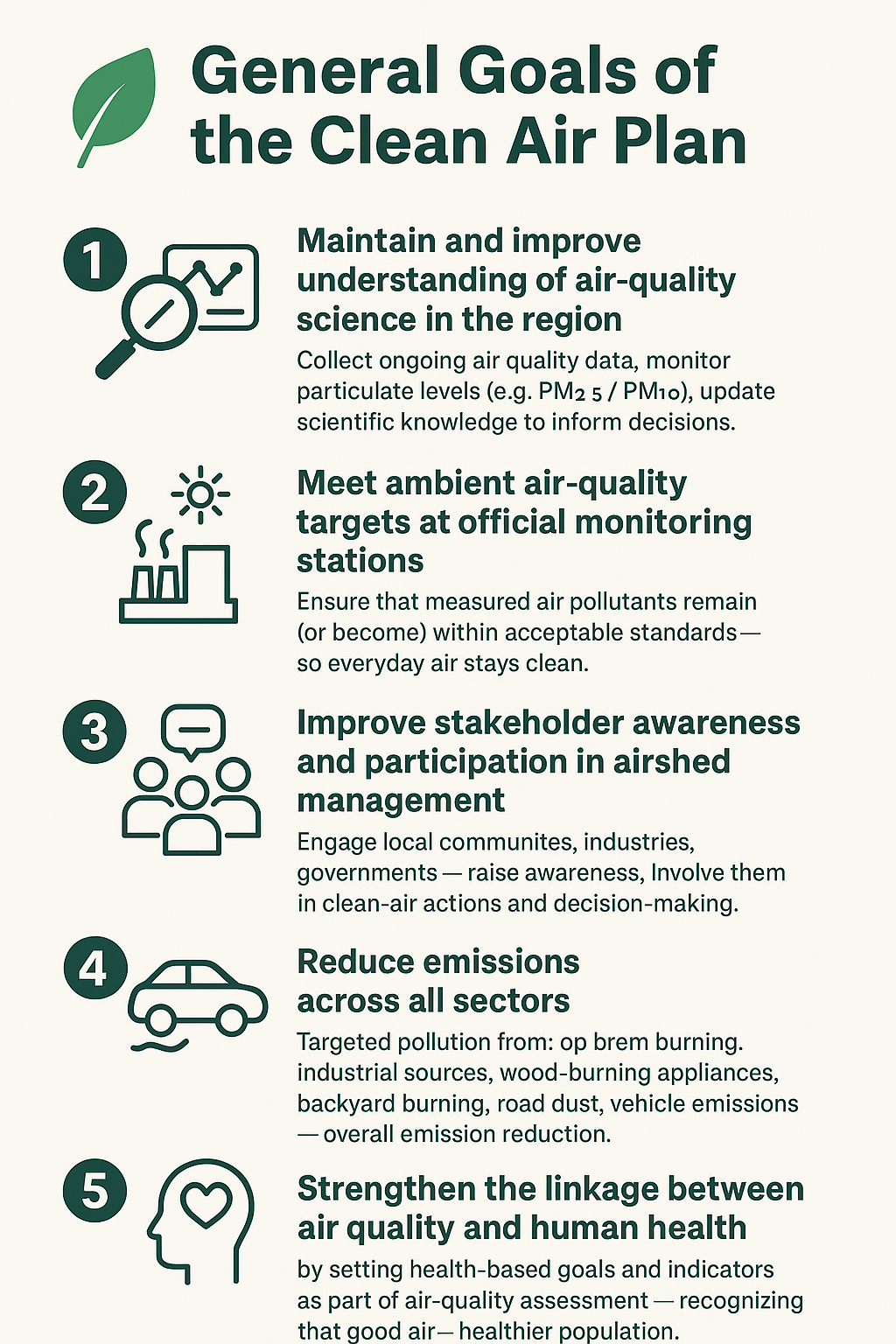
The Clean Air Plan is a collaborative regional strategy focused on improving air quality, protecting public health, and supporting sustainable communities through science, monitoring, education, and shared responsibility.

About the Clean Air Plan

The Bulkley Valley Lakes District Airshed Management Plan is a living document that brings together local governments, Indigenous communities, industry, health professionals, environmental organizations, researchers, and residents to improve regional air quality through collaboration and evidence-based action.

Monitoring & Science

Regional monitoring stations, AQHI information, and particulate matter research help guide long-term decision making and public awareness initiatives.

Community Collaboration

The Clean Air Plan supports partnerships between stakeholders, communities, organizations, and residents to encourage practical and sustainable air quality solutions.

Shared Responsibility

Improving air quality requires participation from government, industry, institutions, communities, and households working together toward common goals.

Current Priorities

The Clean Air Plan focuses on measurable actions that support healthier air, informed decision making, and long-term environmental sustainability.

Residential Wood Smoke

Supporting cleaner heating practices and reducing fine particulate matter from older wood-burning appliances.

Air Quality Monitoring

Expanding sensor networks and improving public access to regional air quality information and trends.

Public Education

Increasing awareness about air quality impacts, AQHI interpretation, and practical emissions reduction strategies.

Regional Collaboration

Coordinating implementation efforts between municipalities, Indigenous communities, organizations, and industry partners.

Stakeholder Sectors

The modernized Clean Air Plan organizes initiatives, reporting, and resources into stakeholder-focused sectors for easier public access and long-term implementation planning.

Government

Policy leadership, infrastructure planning, regional coordination, and airshed governance.

Industry & Resource

Operational best practices, transportation planning, industrial emissions management, and resource-sector collaboration.

Community & Environment

Stewardship initiatives, environmental awareness, outreach programs, and community participation.

Residential

Household air quality awareness, cleaner heating practices, and smoke reduction education.

Health & Science

Air quality research, AQHI interpretation, monitoring stations, and public health information.

Commercial & Institutional

Sustainability planning for schools, healthcare facilities, municipal operations, and institutional buildings.

Air Quality Indicators

Monitoring and reporting remain central to the implementation of the Clean Air Plan and future environmental decision making.

Primary Pollutant Focus PM2.5
Monitoring Approach Regional Sensors
Implementation Model Collaborative
Plan Framework Living Document