
Community Participation & Environmental Stewardship
Improving regional air quality requires long-term collaboration between communities, environmental organizations, volunteers, educators, governments, and residents working together to support healthier airsheds and sustainable environmental practices.
Our Regional Airshed
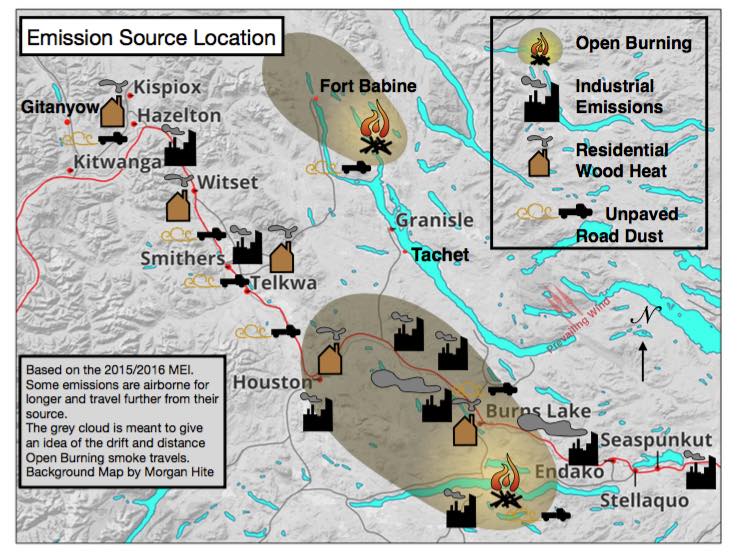
The Bulkley Valley Lakes District airshed includes diverse communities, transportation corridors, forests, watersheds, and ecosystems connected through shared environmental conditions and regional air quality challenges.
Community & Environmental Collaboration
Community participation and environmental stewardship are essential components of the Clean Air Plan. Public awareness, local leadership, educational outreach, and collaborative action all contribute to long-term regional air quality improvement.
Environmental organizations, volunteers, schools, local initiatives, and stewardship programs help strengthen regional implementation capacity while encouraging broader community engagement and awareness.
Community Monitoring & Air Quality Resources
Regional monitoring systems, sensor networks, smoke forecasting tools, and community information resources help improve public awareness and support evidence-based environmental stewardship throughout the airshed.
Community Resource Pages
Access local air quality information, wildfire smoke resources, webcams, emergency preparedness tools, environmental updates, and community monitoring resources.
PurpleAir Regional Sensor Map
View real-time community PM2.5 sensor data and regional smoke conditions using the PurpleAir monitoring network.
UNBC Air Quality Monitoring Map
Explore regional monitoring stations and air quality data through the University of Northern British Columbia monitoring platform.
Community Priorities
Community and environmental initiatives focus on education, collaboration, stewardship, and long-term public participation throughout the airshed region.
Environmental Stewardship
Encourage community-based environmental responsibility and sustainable practices that support cleaner air and healthier ecosystems.
Public Awareness & Education
Improve public understanding of air quality conditions, PM2.5, smoke impacts, venting conditions, and regional environmental issues.
Community Participation
Support volunteer initiatives, collaborative programs, local leadership, and public participation in regional airshed management efforts.
Long-Term Sustainability
Foster long-term community engagement that strengthens environmental resilience and supports future regional sustainability goals.
Community Implementation Areas
Community organizations and environmental initiatives contribute to regional air quality improvement through education, outreach, stewardship, and collaborative participation.
Environmental Education
Educational programs help improve public understanding of air quality conditions, smoke impacts, environmental stewardship, and sustainable community practices.
Schools, outreach initiatives, workshops, and community events all contribute to long-term awareness and engagement.
Volunteer & Stewardship Initiatives
Community volunteers and environmental stewardship groups help support local initiatives, educational campaigns, cleanup activities, and collaborative sustainability efforts.
Community participation strengthens implementation capacity and encourages long-term regional collaboration.
Community Outreach & Public Engagement
Public outreach initiatives help communicate monitoring information, smoke awareness guidance, AQHI updates, and regional environmental priorities to broader audiences.
Accessible communication and public engagement remain essential to successful implementation of the Clean Air Plan.
Waste Reduction & Sustainable Practices
Composting, recycling programs, waste diversion initiatives, and alternatives to open burning can help reduce smoke emissions and support healthier community environments.
Sustainable household and community practices contribute to long-term regional air quality improvement.
Collaborative Regional Stewardship
Participate in the Clean Air Plan
The Clean Air Plan is intended to be a collaborative and evolving regional framework supported by governments, communities, industries, researchers, organizations, and residents throughout the airshed.
Stakeholders are encouraged to both report implementation actions and provide feedback that may help strengthen future updates, priorities, indicators, monitoring approaches, and regional air quality strategies.
Participate in the Clean Air Plan
The Clean Air Plan is intended to be a collaborative and evolving regional framework supported by governments, communities, industries, researchers, organizations, and residents throughout the airshed.
Stakeholders are encouraged to both report implementation actions and provide feedback that may help strengthen future updates, priorities, indicators, monitoring approaches, and regional air quality strategies.
Long-term environmental stewardship depends on collaboration between governments, organizations, industries, schools, volunteers, and residents throughout the airshed region.
Shared responsibility and community leadership help strengthen regional resilience and environmental sustainability.